Australia is on the opposite side of the globe to Estonia, about as far away as possible. Yet, it hosts a comprehensive collection of Estonian documents, books, paintings and artefacts.
The Estonian Archives in Australia was established in 1952 and was conducted for many years by Dr Hugo Salasoo, who had a brick fireproof building constructed at his home to store the collection. During the 1990s, it moved back to Sydney Estonian House at 141-143 Campbell Street, Surry Hills, close to the centre of Sydney, where it is currently housed in a purpose-designed archival space with climate control and compactus shelving.
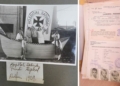
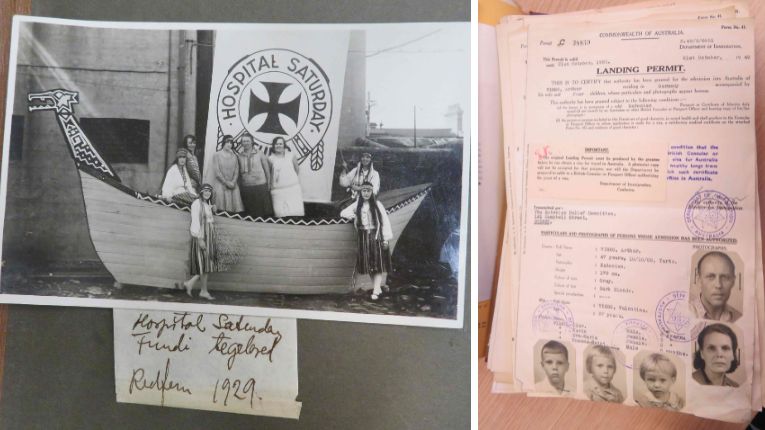
Originally envisaged as an ark floating above loss and forgetfulness, the archive collected everything Estonian. The loss of Estonian independence, the threat to Estonian culture and language from Russian imperialism inspired Estonians in Australia to preserve as much of their culture as possible. Whilst language, handicrafts, dance, song, theatre and living expressions of culture were fostered and encouraged, the physical records of Estonia were also regarded as important. Originally focusing on books, newspapers and articles, the collection quickly branched into preserving programs for events, small leaflets, records of organisations, as well as personal documents. Films, videos and photographs, as well as artworks of various types also landed at the archive. Material arrived from around the world. Not every country where Estonians settled had a suitable repository, so material arrived at the archive. Every Estonian newspaper published across the world was sent to the archive.
After Estonia regained independence, the collecting policy changed. Material judged to be appropriate was repatriated to suitable institutions in Estonia. For reasons of space, overseas Estonian newspapers were no longer collected, particularly since many were now digitally available, as well as duplicates surviving in their countries of origin. The focus is now on documenting the history of Estonians in Australia. The archive still receives regular deposits, particularly from different Estonian organisations operating in Australia. Individuals continue to deposit their personal papers.
The archive’s oral history program was recognised in February 2021, when it was added to the UNESCO Memory of the World register.
Visitors regularly come to the archives. Parliamentarians and officials visiting Australia from Estonia are often shown through the archive, described by the current Estonian ambassador to Australia, Jaan Reinhold, “They are unique not only in the context of Estonian communities in Australia but also within the broader Estica heritage landscape. Every official Estonian delegation I have brought to the Archives has been deeply impressed, often describing the visit as a highlight.”
People of Estonian heritage from Australia and across the world visit the archive or request assistance, seeking information about family. Academic researchers also visit the archive, commenting on its unique resources.
Recently, Priit Laineste, a visitor from Estonia compiled a YouTube video about the archive. It can be viewed at
The archive can be contacted at its email address [email protected].
Further information is available on its website, https://archives.eesti.org.au
The archive is open on Thursdays from 10.00 am to 3.00 pm and any other time by arrangement. Potential visitors are advised to contact the archive before visiting to indicate the nature of their request, so that relevant material can be located.
Dr Terry Kass, Honorary Archivist