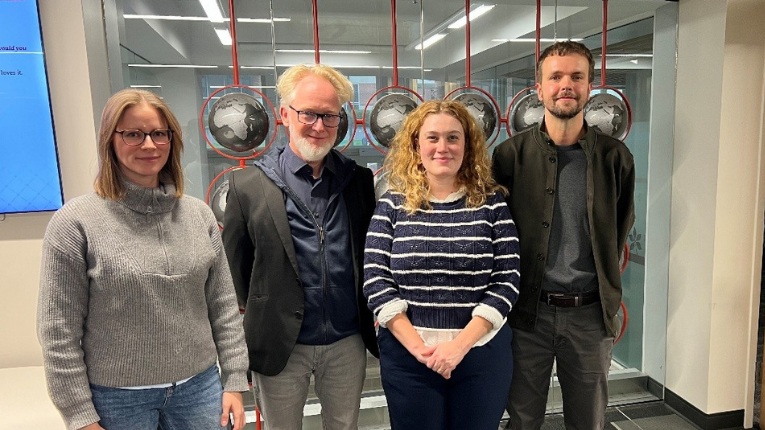
On November 18, 2025, Airi Uuna, Dr. Karsten Brüggemann, and Dr. Kristo Nurmis (pictured with the author), all of Tallinn University, presented their project “The Soviet West Revisited” during a guest lecture at The Ohio State University.
The project, funded by the Estonian Research Council, focuses on the everyday experiences of Estonians in the 1960s and 1970s. The project aims to examine the agency of Estonians living in an illiberal society through key areas like labor, education, and leisure to create a more inclusive understanding of the past.
The event, funded by the Estonian National American Council, The Ohio State University History Department, the Mershon Center for International Security Studies, and the Global Arts and Humanities Center, drew an audience of nearly 20 faculty, students, staff, and members of the public.
Dr. Nicholas Breyfogle, professor of History and Director of the Harvey Goldberg Center for Excellence in Teaching, noted: “‘The Soviet West Revisited’ was an innovative and fascinating exploration of new ways of understanding the everyday lived experience in Soviet Estonia; everyone who attended the talks learned a great deal. The three scholars were marvelous intellectual ambassadors for the sorts of creative and deeply researched historical work happening in Estonia.”
Dr. Brüggemann opened the lecture by presenting his research on the Eesti Teadus Ühing (Estonian Knowledge Society) and the society’s role in disseminating Soviet propaganda to the wider population in the 1960s.
Dr. Nurmis then presented on literature and works of art produced by the Estonian Red Army veterans, including the paintings of Leo Leola and writings of Juhan Peegel, to explore the veteran experience across the late Soviet period.
Finally, Airi Uuna shared her research findings that the Soviet Estonian marketing firm, ERF, used televised game shows in the 1960s and 1970s to advertise workplaces to the public as a labor source.
The event ended with a lively question-and-answer session. Dr. Angela Britlinger, professor of Slavic Languages and Cultures and director of the Center for Slavic, East European, and Eurasian Studies at The Ohio State University, remarked: “The presentations about the project ‘Soviet West’ had an enthusiastic audience that included venerable professors, students writing MA and PhD theses, and even younger students. This fascinating look into the 20th century seemed relevant even to the most curious but naïve students, including a second-year finance major who asked questions to better understand the socialist context of the Estonian labor market in the USSR.”
Tara Godwin
About the author: Tara Godwin is a Ph.D. student at The Ohio State University. Her research interests focus on the development of feminist thought in Estonia in the late 19th and 20th centuries.